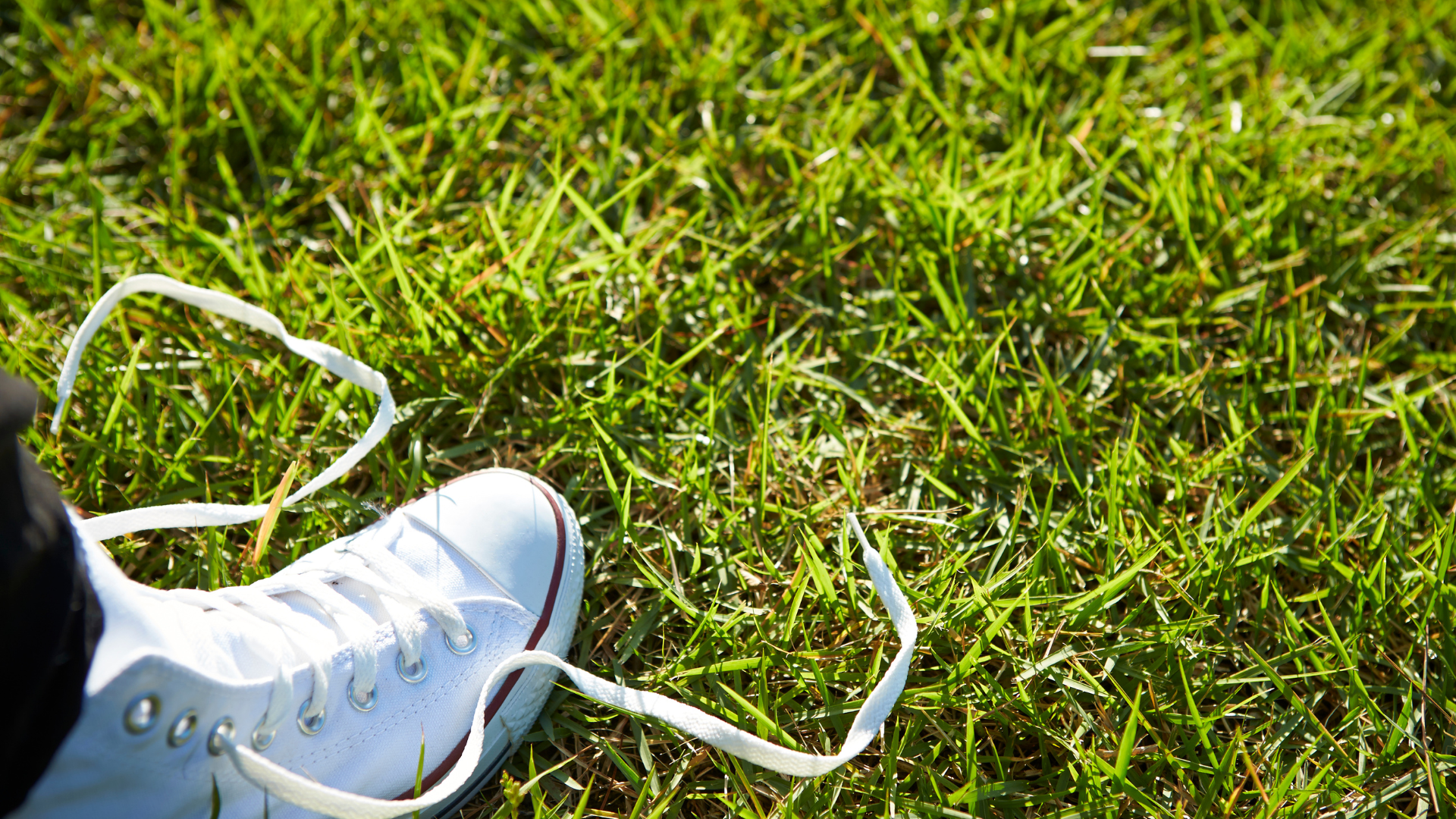
Most of the discomfort I’ve felt in my life had nothing to do with what happened to me—and everything to do with how I reacted. It’s strange how the smallest things can throw us off balance. A friend of mine calls these broken shoelace moments: not the big events, but the little frustrations that catch us off guard and shake something loose inside.
If you prefer to watch rather than read, the video version of this reflection is available at the bottom of the page.
My entry point into all of this wasn’t Buddhism itself—it was Buddhist-informed recovery, specifically Recovery Dharma. In those early meetings, I kept hearing the First Noble Truth: in this life, there is suffering.
At first, that word didn’t sit right with me. “Suffering” sounded dramatic, like something reserved for major loss or tragedy. I didn’t think of my everyday frustrations as suffering.
But the more I sat with it, the more I realized this teaching wasn’t about tragedy—it was about real, everyday life. And let me be clear: I’m not a Buddhist teacher. I’m just someone trying to make sense of these teachings while navigating life, recovery, and all the messy moments in between.
And the simplest way I’ve come to understand this teaching is this:
in this life, shit happens.
That’s the closest everyday translation I’ve found for suffering or dukkha — shit… happens.
In traditional Buddhist language, dukkha was often described as a wheel that doesn’t spin smoothly—a life that feels a little uneven, a little out of rhythm.
Some of this discomfort comes from life itself, and some of it comes from the things we do, say, or hold on to.
Over time, I’ve learned that we’re really dealing with two different kinds of discomfort—and now I can see how both have shown up throughout my life, long before I had the language for it.
1. The Discomfort We Don’t Control
Life happens without asking. Someone cuts us off in traffic. Someone snaps at us. Something important falls through. These moments show up fast.
For most of my life, my reactions showed up just as fast. I’d lay on the horn, mutter under my breath, and carry that anger for miles. My reaction didn’t make anything better—it just added more weight.
Recovery has taught me that while I can’t control what someone else does, I can choose what I do.
I can react, or I can respond — react immediately from impulse, or respond with intention after taking a breath or two… or three.
2. The Discomfort We Create Ourselves
Then there’s the discomfort we create ourselves—through our own words, actions, and choices. Some of it is obvious. If I speed and get pulled over, the suffering I’ve created is straightforward: a stiff fine, an inconvenient stop, maybe even higher insurance rates.
But a lot of the discomfort we create is far more subtle. For example, it can show up in the words we choose to use, or even the tone we use with someone. It can be the quick comment we wish we had said differently, or the way we hold onto a moment long after it’s over. Sometimes a tiny irritation can turn into a whole internal storm.
Just this week, I answered someone in a short, irritated tone. Hours later, I still felt something unsettled in me—not because of what they said, but because my own response didn’t sit well with me. And this, in Buddhist terms, is a form of suffering—discomfort I created myself.
Practices like wise speech and wise action have become essential for me. They’re not lofty or complicated—they’re simple ways to avoid creating extra suffering when none is needed.
Why This Matters
Many of us know these “broken shoelace moments.” We react before thinking. We say things we wish we hadn’t. And often, the discomfort we feel isn’t coming from the situation—it’s coming from what we added to it.
For me, it really comes down to two questions:
How can I respond better to the things I can’t control?
How can I live in a way that doesn’t create unnecessary suffering for myself or the people around me?
Those two questions shape so much of my recovery. They help me slow down. They help me choose what matters. They help me stay steady when life feels uneven.
Life will always wobble a little. Growth is learning how to steady ourselves when it does.